Archive for the 'Museums' Category
Thursday, February 16th, 2012
Print/Out: MoMA surveys contemporary printing
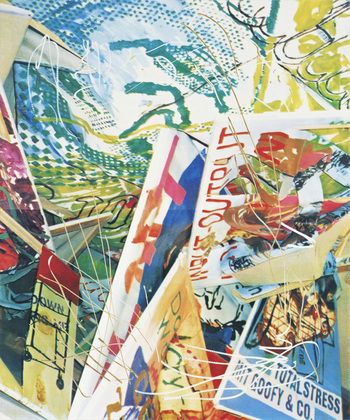
Martin Kippenberger, Content on Tour (Inhalt auf Reisen), 1992, Screenprint mounted on plywood, with unique alterations by the artist, 70 7/8 x 59" (180 x 150 cm). Publisher and printer: Edition Artelier, Graz, Austria. © Estate Martin Kippenberger, Galerie Gisela Capitain, Cologne. Photograph: Lothar Schnepf, Cologne.
Earlier this week I attended the opening reception for Print/Out, MoMA’s latest exhibit to highlight printing practices, this time, surveying contemporary projects and series of the last two decades. Culled almost exclusively from the museum’s Department of Prints and Illustrated Books, the exhibit is as visually compelling as it is informative. A section devoted to the work of Edition Jacob Samuel, highlighted by a display and video demonstration of his portable aquatint box and Marina Abramovic portfolio, offers a rare glimpse at the technical artistry of the print master and his practice. In Harper’s Pictorial History of the Civil War (Annotated), Kara Walker’s solid black silhouette figures find new context, silkscreened against reproductions of an 1886 publication of Civil War prints. Selections from Damien Hirst’s 1999 Last Supper portfolio remind me why he was once interesting. Danish collective Superflex (who launch a solo show at Peter Blum next month) have set up a functioning workshop, inviting visitors to create replicas of iconic modern lamp designs by selecting a design and pasting computer print outs onto small wooden box frames. The works will be periodically hung from the gallery’s ceiling, growing an installation of art reproductions over time. The participatory piece in flux may just compel me visit again in a few weeks.
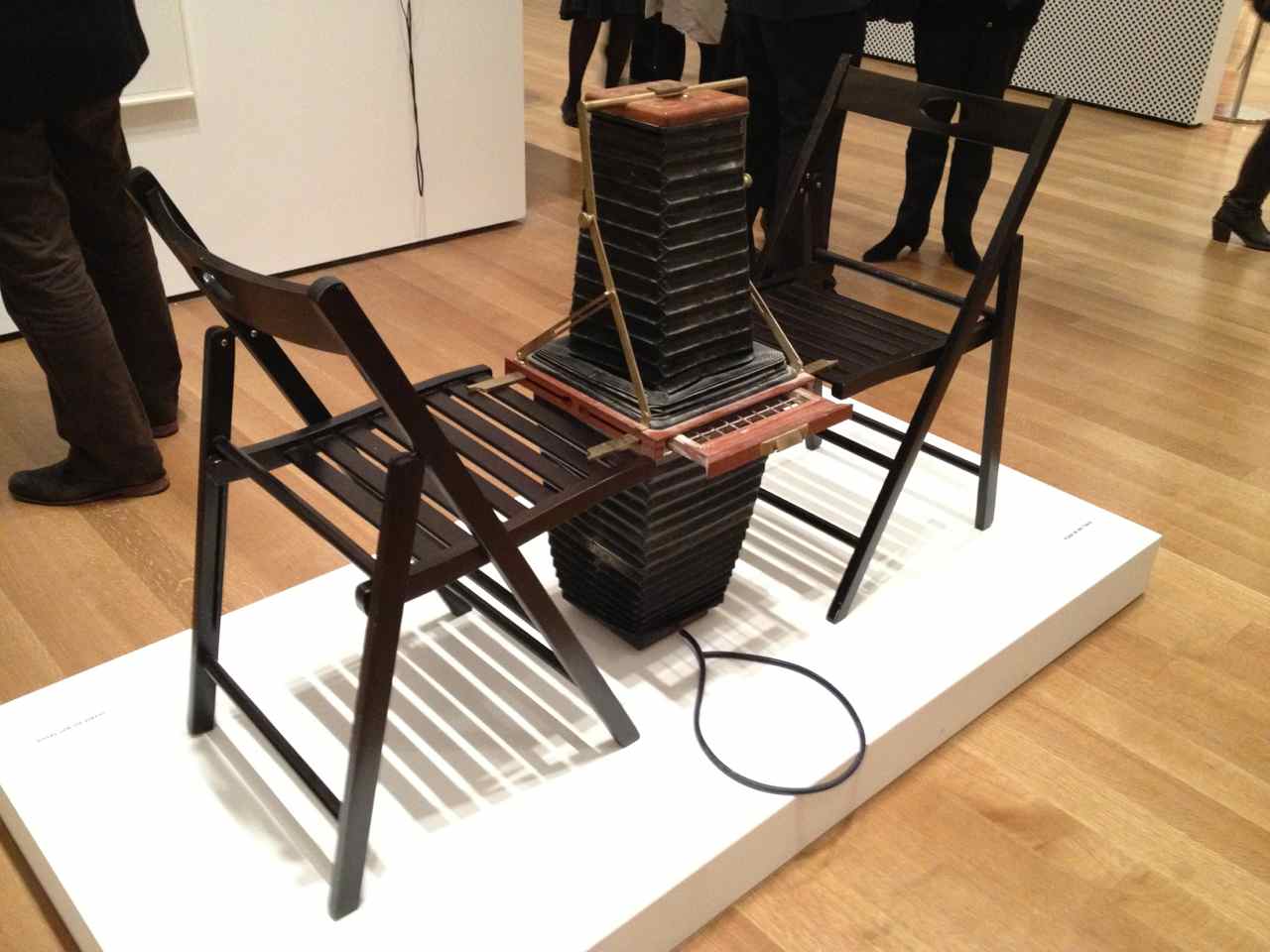
Jacob Samuel’s portable aquatint box.
Wednesday, September 1st, 2010
KAWS Limited Signed Monograph Available Now
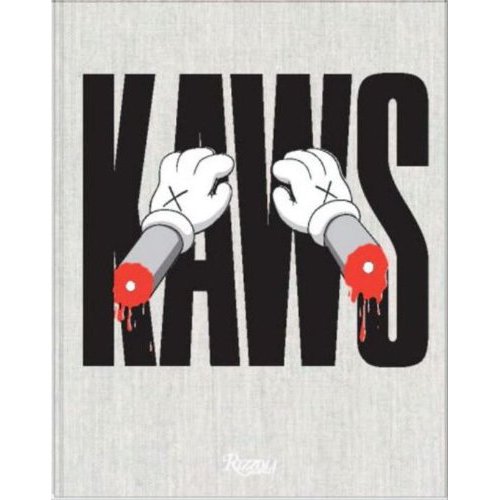
A quick post for all of you who have been anticipating the November release of the upcoming KAWS monograph. The Aldrich Museum, which is currently hosting the artists’ retrospective exhibition, is offering 250 signed copies of the 264 page hardcover book, available for pre-order in their online store here.
Thursday, July 15th, 2010
Interview :: TAC Talks with Curator Mónica Ramírez-Montagut about KAWS

(All Images: Jeff Newman/TheArtCollectors, except where noted)
Despite years of circumventing mainstream art circles and rarely showing his work publicly, KAWS has built up a massively dedicated following of collectors who obsessively seek out his creations, from limited edition toys and clothing, to even more elusive original paintings and drawings. After eight years of absence in the U.S and five years since exhibiting internationally, 2008 marked the artists’ return to gallery walls. With three consecutive solo shows in Miami, New York and Los Angeles, KAWS unveiled entirely new bodies of work that signaled a young artist on the verge of his most productive phase to date.
His most recent display is is no exception to this trajectory. On June 27th, the Aldrich Contemporary Art Museum, Connecticut, opened the doors to KAWS’ first solo museum exhibition, providing a retrospective look at his graffiti roots, fine art, and commercial projects, as well as brand new sculptural and installation pieces that stand as his largest and most ambitious to date.
TheArtCollectors spoke with curator Mónica Ramírez-Montagut about the process of creating the landmark exhibition. Read on for the conversation, click images for larger views.
Monday, July 12th, 2010
Basel 41 Art Salon Talks Now Online
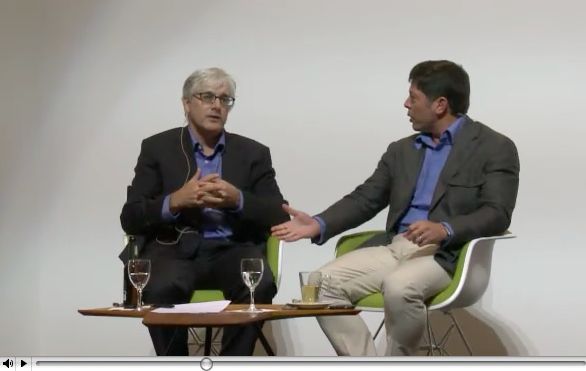
Videos for all the Art Salon Talks from Art 41 Basel Switzerland are now available to view or download on the fair’s website here. The above conversation, “Collector Power – Who Has It and Who Doesn’t,” between Josh Baer, art advisor and publisher of the Baer Fax art industry newsletter, and heavyweight collector Adam Lindemann is worth a watch (click pic to launch video).
Sunday, July 11th, 2010
Saatchi to Gift Gallery and Millions in Art to England
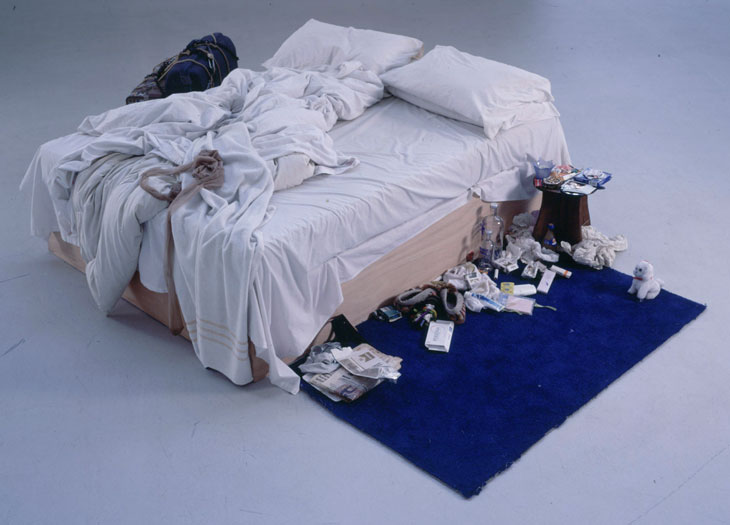
Tracy Emin’s My Bed (1998), one of the 200 works of art Charles Saatchi plans on gifting to the British government.
Outspoken advertising and art collecting tycoon Charles Saatchi has announced plans to gift his London gallery and some 200 works of art to the British government upon his retirement. While terms of the donation have not yet been ironed out and Saatchi has not specified a retirement date, the deal would put an estimated $37.5 million worth of art, along with Saatchi’s 70,000 sq ft exhibit space (to be renamed The Museum of Contemporary Art, London) in the nation’s hands. Statements from the gallery clarified that no charges would fall on the nation’s taxpayers, nor would Mr. Saatchi himself receive any tax benefits from the gift.
While the works to be donated may serve as hefty building blocks for a new museum, ultimately its success as a major public art institution will rest on what government agencies are given the task, who is brought in to curate and direct, how new works will be acquired by the collection, and in doing so, what will be purged.
More at the NYTimes and Guardian
Friday, June 25th, 2010
Preview :: KAWS Creates His Largest Onsite Mural for Aldrich

KAWS – The Wall (detail), 2010. (Image: Courtesy of the artist)
By now you’ve most likely heard about the debut of KAWS’ first museum exhibition, debuting this Sunday at The Aldrich Contemporary Art Museum. The retrospective will survey the artist’s earlier work, products, and most recent paintings, including some never before seen pieces. While, details have been quite tight, the first image from has finally surfaced, providing a glimpse at KAWS’ largest onsite mural to date. More to come….
Monday, June 21st, 2010
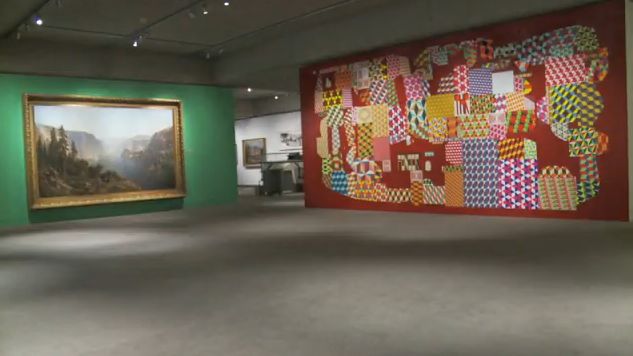
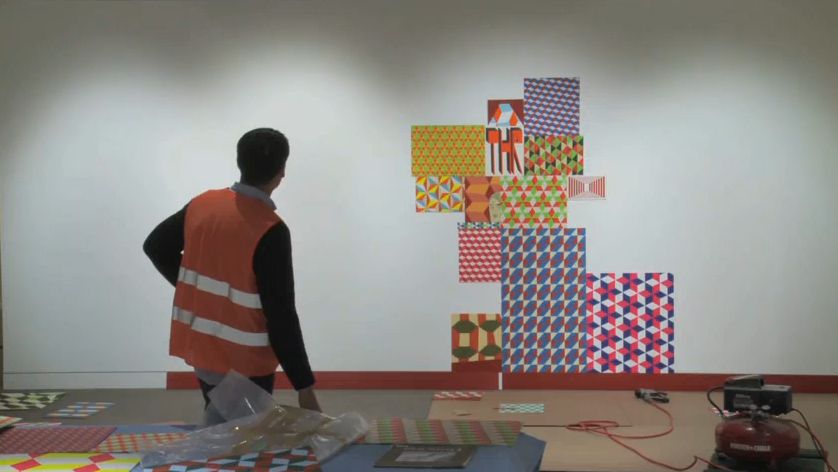
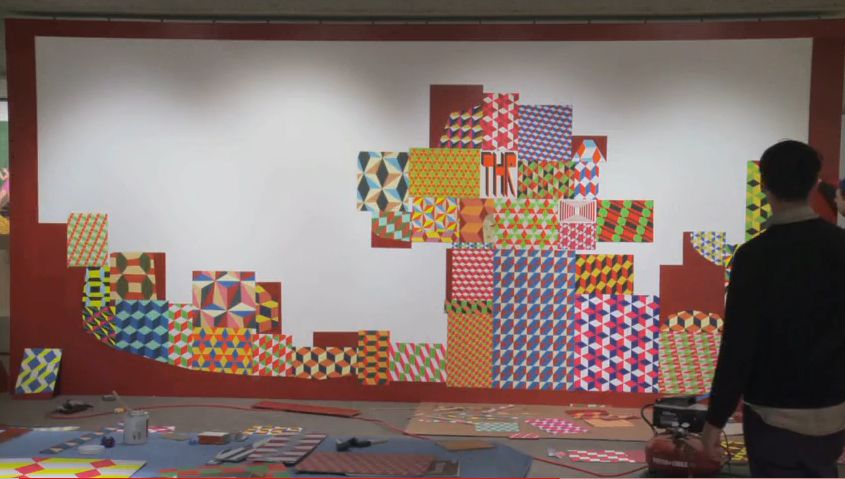
Amusing Ourselves To Death :: McGee + Rojas Together at Bolinas Museum
(Image: Bolinas Museum)
Barry McGee doesn’t watch TV. “These are all things that Americans do, they sit at home and watch television, they go into work the next day and everyone talks about what happened on Taxi—that’s one of the last shows I watched on television, sorry.”
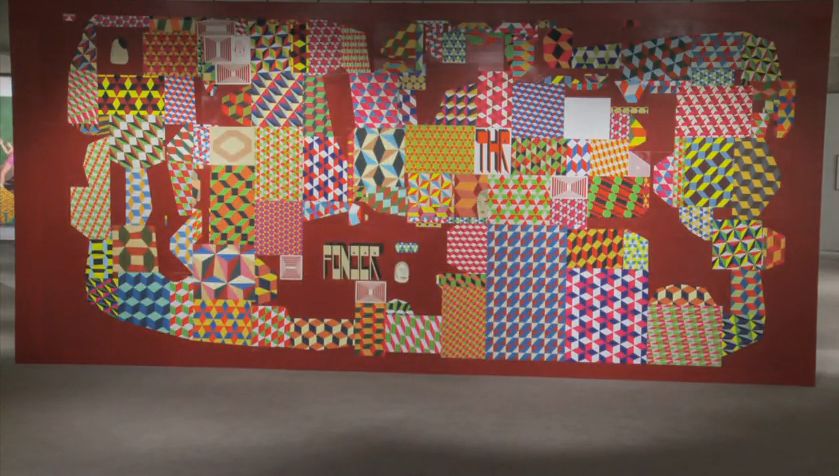
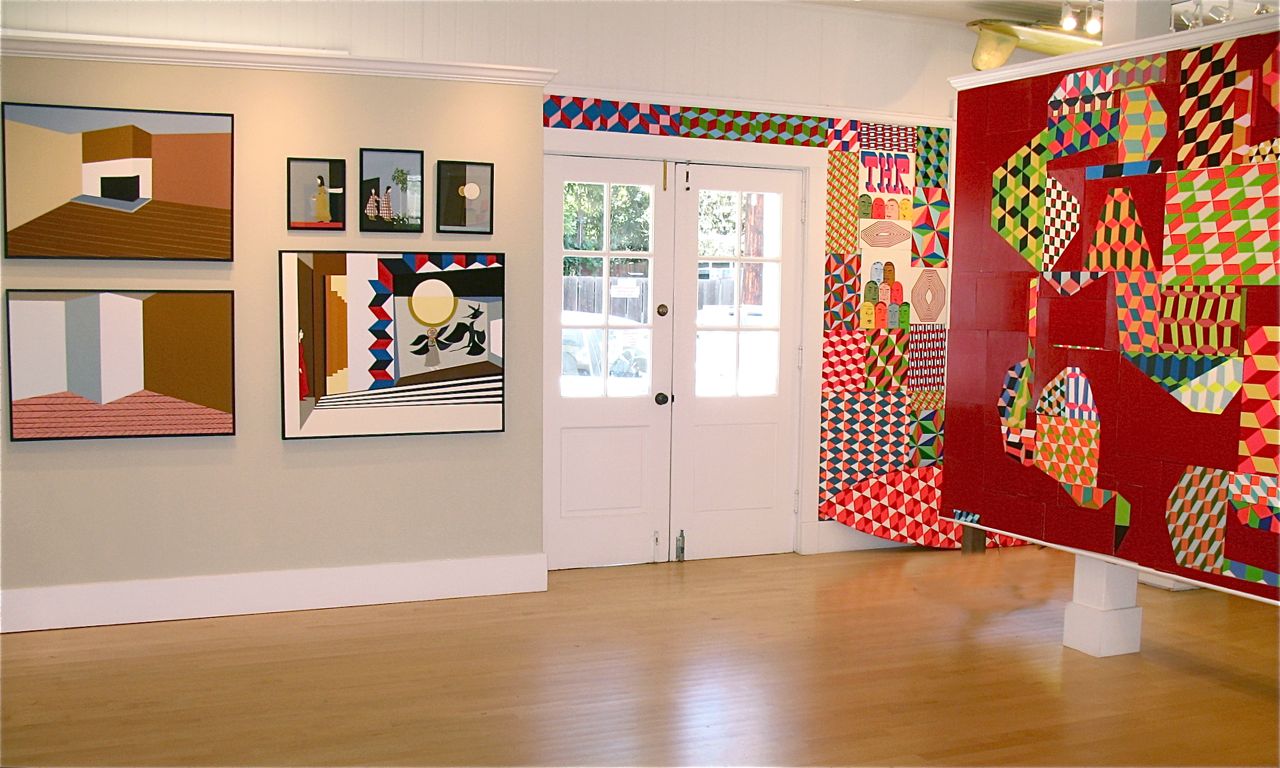
Mcgee is known for overwhelming his audience with an inundation of mind numbing geometric clusters that visualize the psychological and social effects of media bombardment. Like the troubled characters found in them, looking at these works can leave the brain both exhausted and confused in a cognitive haze that Jerry Mander predicted would ultimatley lead to the expansion of power by dominant controllers in society.
Have we been manipulated, or are we to blame? As Neil Postman later distinguished, Orwell’s vision of the future and Huxley’s Brave New World were not one in the same. One warned that we will be overcome by externally imposed domination. The other prophesized something far more unsettling – that we will come to love our oppression, freely trading in our capacities to think for the technologies and entertainment we cherish.

(Image: Bolinas Museum)
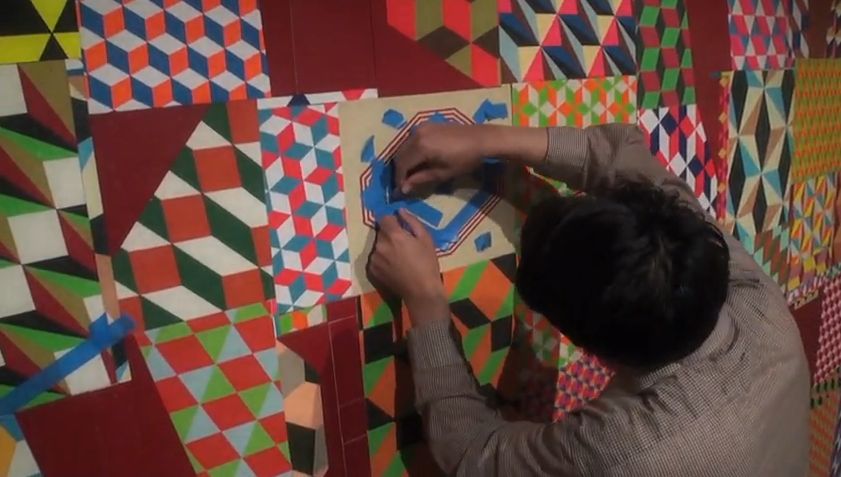
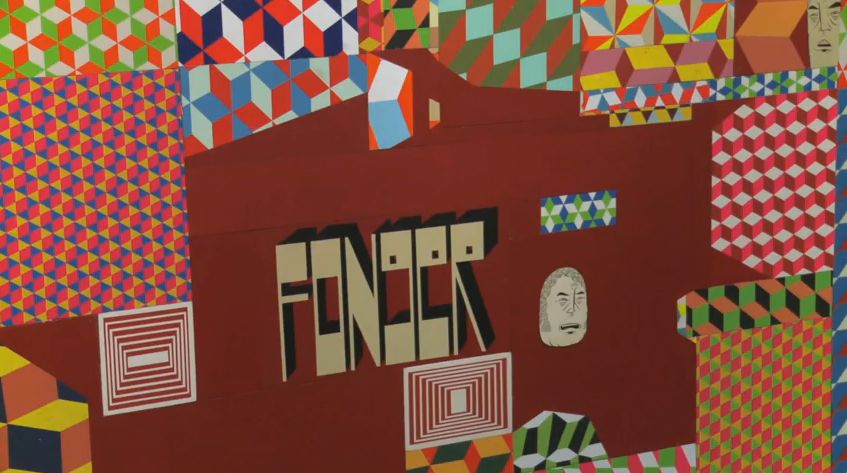
Mander urged us to be radical – to “kill our televisions” and dismantle technological civilization. Postman warned it was getting too late – we had already willingly given up and “amused ourselves to death.” Lately, McGee seems caught in the middle. His chaotic wall static has been disrupted, yielding to dense blocks of solid red, with only broken, fragmented shards of pattern remaining. These have given way to simpler forms – a few small floating cubes, a single triangle or an octagon. There are even recognizable objects like detergent bottles – the ultimate sign of the never ending mindless consumer choices that have replaced actual freedom of thought. If the pessimism of his work from the last few years rendered us helplessly adrift in a violent media frenzy, these newer installations show McGee pushing back against the noise, urging us to break through the clutter, recognize our own complicity, and regain control.
(Image: Gamma888)
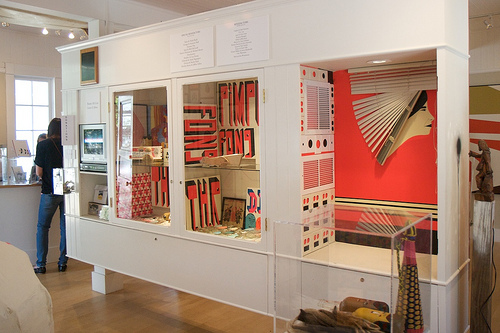
Partner in life and art Clare Rojas explores similar new territory. The empty interiors of her recent paintings suggest spaces to be filled. Stripped of their belongings, we are pressed to find any identity in what remains in these barren rooms. In one painting a figure lays in bed staring at a TV on a nightstand. Another shows a simple house suspended against a white background. One sad looking woman sits at an empty table, while another reaches out her hand towards a garden of flowers. In an alcove, a woman’s face is partially covered by window blinds. In the same area, walls are cleverly paneled in central air vents and light switch or outlet covers that take on the look of morse code dots and dashes. But what does it all mean? While McGee reveals the brainwashing of our collective conscience, Rojas projects the effects of this dumbing down onto the trappings of domestic living, where we’ve cashed in our free will for freedom at the checkout line.

(Image: Bolinas Museum)
It is interesting that the Bolinas exhibition is being presented with two separate titles. While this isn’t the first time the artist couple has shown together, the two have joined here to deliver what is there most seamless presentation to date. When asked by fellow artist Andrew Jeffrey Wright where he’d like to be in five years, McGee said he “[hoped] to be entirely removed from society by that time. Off the map. Checked out.” With Leave it Alone we can understand why, and with Rojas’ Together at Last it’s clear that if the time comes, the two will disappear hand in hand.
Lots more images over on TAC member Gamma888’s flickr
Barry McGee – Leave it Alone / Clare Rojas – Together at Last
June 19 – August 1
Bolinas Museum
Hours: Fridays – Sundays, 1 – 5 pm
48 Wharf Road
Bolinas, CA 94924
phone: 415.868.0330
Friday, June 18th, 2010
With Move, New Challenges for Whitney
(Image: Renzo Piano Building Workshop, Architects via NY Times)
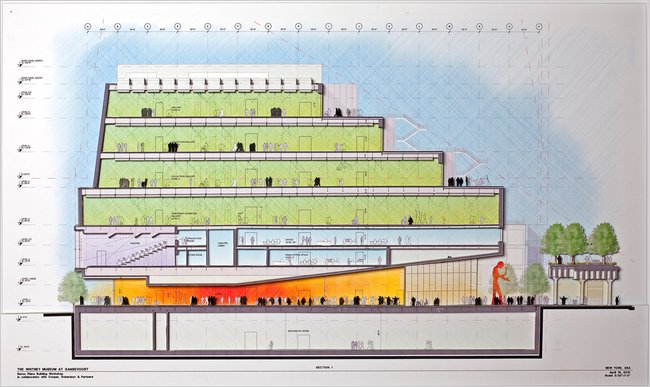
In his New York Times piece today, Nicolai Ouroussoff provides an insightful, if somewhat critical overview of the Whitney’s proposed design for its new location in New York’s meatpacking district. The article comes weeks after the museum’s board officially announced plans to break ground next year on their future downtown home, with completion targeted for 2015. With construction prices at a long-time low and its endowment hit hard by the economic downturn, the museum has given architect Renzo Piano the task of trimming costs and meeting crucial building deadlines, before prices rise back to pre-recession levels.
While acknowledging the necessity to do so, Ouroussoff skeptically questions what the final result of such cutbacks in both dollars and time will be. Noting that few institutions’ identities are as closely linked to their physical structures as the Whitney’s is to its original Marcel Breuer building, Ouroussoff challenges the museum and its architect to succeed at making sure the new location “rise at least to the same level as the original building as a place to view art,” warning “Anything less will not only be a shame for the city, but a defining emblem of failure for the Whitney.”

A rendering of the new Whitney, viewed from Washington and Ganesvoort Streets, with the High Line shown in the foreground. (Image: Renzo Piano Building Workshop, Architects via NY Times)
Wednesday, June 9th, 2010
MoMA Lights
Tuesday, June 8th, 2010
Speechless….
Commissioned for the Oakland Museum of California’s new Gallery of California Art. On view now through 2013.